January 19, 2026
8 min
Beauty
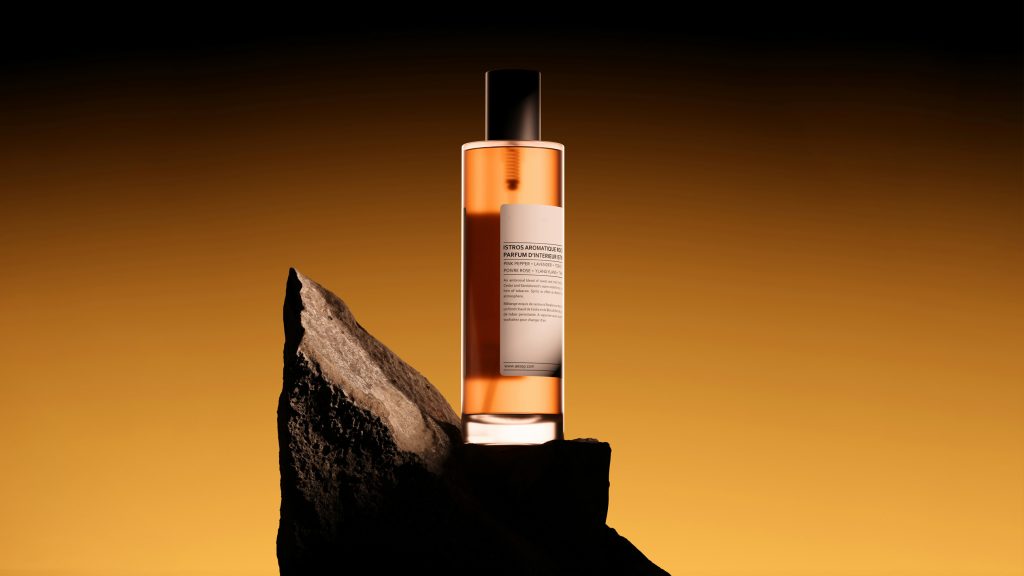
The quality of a luxury cosmetic bottle is not determined at the molding stage, but much earlier, through a succession of decisive choices that commit the product for years to come.
Iconic or rational shape, glass or premium plastic, visible thickness or controlled material tension: each decision influences desirability, industrial feasibility, and economic performance.
For beauty industry players, understanding how creative intent transforms into an industrialized bottle is essential to make the right trade-offs, anticipate technical constraints, and guarantee packaging that is faithful to their positioning and quality requirements.
Key takeaways:
Every high-end bottle project begins with an in-depth dialogue between the cosmetic brand and its packaging partner. The creative brief is not limited to an aesthetic direction: it formalizes a comprehensive vision integrating positioning, target audience, sensory universe, and differentiation ambitions.
At this stage, several structural parameters are established:
These choices immediately guide volumes, lines, and quality perception.
In parallel, technical constraints are analyzed very early on. Compatibility with formulas (sensitivity to light, oxidation, migration), ergonomics of use, regulatory standards, logistics constraints, or recyclability objectives influence the design from the earliest phases.
Once the framework is established, the creative phase can fully express itself. Designers translate the brief’s intentions into exploratory sketches, playing with proportions, lines of force, and light-material interactions. These sketches allow for rapid testing of several formal approaches before entering more precise work.
3D renderings then take over. They offer a realistic visualization of the bottle, integrating transparency, thickness, surface effects, and potential decorations. This stage is crucial for validating volumes, anticipating shelf perception, and projecting the object into its marketing environment.
Material selection already occurs at this stage: glass, premium plastic, hybrid or multi-material solutions. Each option involves specific manufacturing constraints, different costs, and varying luxury perception.
Initial feasibility simulations help identify technical limitations before proceeding further.
Once the design is stabilized, the project shifts into a more technical phase. CAD (Computer-Aided Design) modeling translates the design into industrially exploitable data. Every radius, every thickness, every tolerance is precisely defined to guarantee bottle reproducibility.
Physical prototypes are then produced, typically through 3D printing or machining. These models allow testing of actual ergonomics, grip, visual balance, and consistency with accessories (pumps, caps, closure systems).
Marketing and technical teams can thus validate or adjust initial choices before industrialization.
Before any mold manufacturing, a thorough feasibility study is conducted. It involves analyzing the bottle’s geometry from the perspective of the chosen transformation process.
The objective is to identify potential risks: demolding difficulties, appearance defects, internal stresses, or structural weaknesses. These analyses also validate the adequacy between design and envisioned industrial processes.
In luxury, this phase is particularly demanding. Tolerances are tight, finishes must be impeccable, and repeatability perfect over sometimes substantial volumes.
Mold design is a discipline in its own right. It involves creating a tool capable of faithfully reproducing the bottle thousands or even millions of times without quality degradation.
The mold architecture integrates several key elements: cavities, injection channels, ejection systems, and cooling circuits. The choice of steels and surface treatments determines mold durability and the quality of finishes obtained.
Particular attention is paid to anticipating shrinkage and deformation phenomena. These parameters, linked to material behavior during cooling, are integrated from the design stage to guarantee final dimensions consistent with the initial design.
Mold manufacturing relies on very high-precision machining technologies. Milling, electrical discharge machining (EDM), and manual polishing operations follow one another to achieve tolerances on the order of one hundredth of a millimeter.
Finishes play a crucial role here. Mirror polishing will produce perfect transparency, while textured treatment will generate matte or satin effects directly during molding.
Before validation, the mold is assembled and subjected to closure and functionality tests. Rigorous dimensional controls guarantee tool compliance before production entry.
Molding stands as a central ground for cosmetic packaging innovation, offering concrete levers to improve industrial repeatability, perceived quality, and environmental efficiency of premium bottles.
The molding process directly depends on the chosen material.
For glass, press-blow or blow molding techniques allow creating complex shapes with excellent optical quality. Temperature control and cycle times are crucial here to avoid bubbles or internal stresses.
For premium plastics, several processes coexist: injection, injection-blow molding, or injection-stretch-blow molding. Each method responds to specific requirements in terms of thickness, transparency, or mechanical resistance.
In all cases, production parameters (pressure, temperature, speed) are finely adjusted to guarantee perfect consistency across the entire series.
Luxury tolerates no compromise on quality. Controls cover visual appearance, dimensions, tightness, and functional compliance. Defects such as bubbles, flash, or thickness variations are detected in real time.
Traceability is also a major issue. Each batch is identified and documented according to strict standards, in compliance with ISO requirements and cosmetic good manufacturing practices.
Once molded, the bottle enters a finishing phase. Deburring, polishing, or surface treatments enhance the object. Metallization, lacquering, screen printing, or pad printing add a strong decorative dimension.
Assembly with caps, pumps, or closures is then performed, followed by final controls before packaging. Every detail matters to guarantee a premium experience consistent with the brand’s positioning.
At AROS Group, cosmetic packaging is conceived as the natural extension of the product and its usage ritual. From design to industrialization of high-end bottles, teams combine aesthetic requirements, technical mastery, and industrial performance.
Thanks to multi-material expertise and perfect knowledge of molding processes, each creation becomes a signature object, designed to enhance the formula, assert brand identity, and integrate current sustainability challenges.
From the first creative intent to industrial molding, manufacturing a high-end cosmetic bottle is a journey of excellence, where each stage conditions the next. Design, engineering, material mastery, and quality control intertwine to give birth to an object that is simultaneously functional, desirable, and meaningful.
This complexity explains the importance of choosing the right packaging manufacturer. Translating a brand vision into an industrializable object without altering its essence requires comprehensive expertise and precise orchestration of know-how.
In this integrated approach, AROS Group supports luxury cosmetic brands from design to manufacturing, combining creativity, industrial rigor, and sustainable innovation. An invitation to think of the bottle not as a technical constraint, but as a genuine strategic lever for differentiation..