December 8, 2025
7 min
Beauty
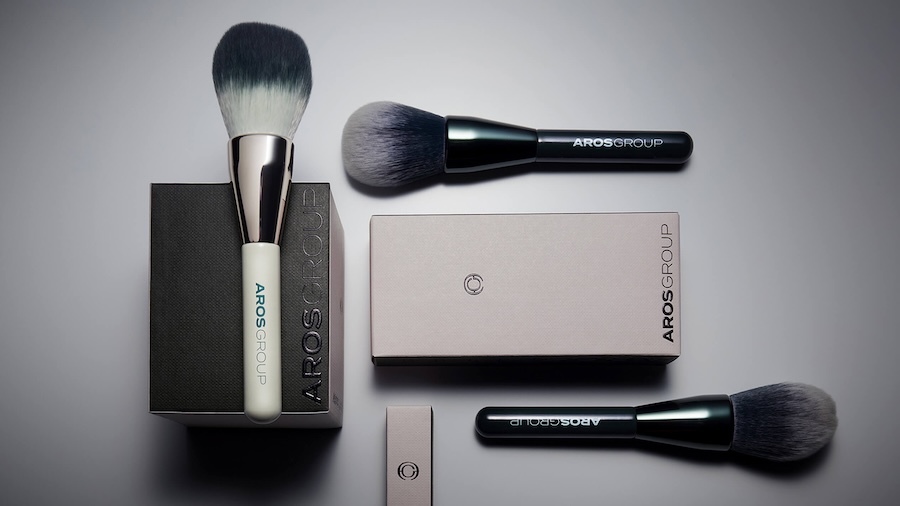
In the world of beauty, innovation is no longer about introducing a new material or reinventing an iconic silhouette. It emerges from the ability to orchestrate a set of requirements (industrialisation, regulation, circularity, performance) and make them interact with the precision of a mastered gesture.
In a context where standards are tightening, where resources are becoming scarce, and where sustainability must be demonstrated through facts, each advancement becomes an exercise in balance: a subtle encounter between material, technique, and intention.
At AROS Group, this innovation is a silent, almost choreographed discipline: turning constraints into possibilities, refining every detail so that form serves purpose, and embedding responsibility into the very act of design.
Key takeaways:
The European PPWR regulation (in force since February 2025, with gradual application from August 2026) introduces a framework that reshapes all packaging strategies.
Its obligations include:
These requirements transform the entire design chain:
PPWR therefore shifts innovation toward simplified architectures, mono-material designs where possible, validated through industrial-scale recyclability testing.
Lightweighting remains one of the most effective levers for reducing a packaging’s environmental impact; provided it preserves rigidity and premium perception.
Advanced blowing techniques now make it possible to produce 50 ml bottles weighing under 50 g, without compromising aesthetics.
This performance relies on:
These innovations enable lightweighting without diminishing perceived value, an essential balance in premium cosmetics.
In plastics, the rise of mono-material packaging is transforming specifications. Using a single polymer for the body, pump and cap enables:
However, this simplification requires rethinking fixation systems: metallic inserts and stainless-steel springs disappear, replaced by polymer clips and integrated flexible membranes.
Lightweight aluminium is also gaining ground, especially for sleeves and compacts. Combined with laser cutting and high-precision stamping, it reduces material usage without sacrificing rigidity or closure quality.
This material meets two essential expectations: infinite recyclability and a premium image, now inseparable in the world of luxury.
Refillability is no longer a concept; it is becoming an expected norm, especially in facial skincare. But developing a refillable system goes far beyond selecting a mechanism: it requires rethinking the object, the gesture, and the relationship between user and product.
A refillable packaging must withstand time and repeated handling. This implies:
The main container becomes a long-lasting object, designed to survive several cycles; a major shift in premium cosmetics.
User experience is central. The gesture must be intuitive, clean and safe.
Today, three systems dominate:
The choice depends on market segment, expected refill frequency, and the brand’s ability to support users in adoption.
Innovation is not limited to refillability but extends to the final gesture; the one that connects the product with the skin.
Key advances include:
These discreet innovations transform product experience while optimising the amount used.
PPWR requires digital marking (QR codes or similar) for reusable packaging within 48 months of its entry into force.
A DataMatrix or QR code engraved or printed on the bottom of a bottle enables lifecycle tracking:
This traceability paves the way for industrial-scale deposit systems, where each container becomes an identifiable asset.
Integrating such markings requires anticipating their long-term legibility:
R&D teams must now integrate these parameters from the design phase, not post-production.
Smart packaging goes further: integrated NFC chips, thermochromic inks reacting to temperature, dynamic QR codes enabling product authentication.
These technologies address consumer-engagement challenges:
At AROS Group, we support cosmetic brands across the entire value chain, from strategic design to operational industrialisation. Our expertise includes regulatory compliance, process optimisation, supply-chain security, and environmental performance management.
True innovation cannot be proclaimed. It must be built, tested, industrialised and demonstrated.