March 9, 2026
10 min
Beauty
In a luxury market where visual excellence has become the norm, the great houses face a new challenge: how to provoke emotion when beauty alone no longer differentiates? The answer emerges from a territory that packaging had never fully explored; that of the non-visual senses.
Tactility, sound, olfactory signature: these dimensions constitute today the new strategic language of luxury sensory packaging, the one that transforms a simple container into a memorable ritual.
Key takeaways:
For decades, the prestige of luxury packaging was expressed almost exclusively through vision: gilding, exclusive typography, architectural proportions, signature colours. These codes remain essential, but their power of differentiation erodes as visual sophistication becomes widespread. On premium shelves as on e-commerce platforms, every brand competes in formal elegance, and the consumer, exposed to a permanent aesthetic inflation, develops a form of visual saturation.
It is in this context that sensory packaging establishes itself as the next territory of distinction. Activating touch, provoking an acoustic reaction, awakening an olfactory memory: these levers create a deeper emotional connection, one that is harder to imitate and above all more durable in the client’s memory.
Neuroscience confirms what perfumers and jewellers had long sensed intuitively: multisensory emotions leave far stronger cognitive traces than isolated visual stimuli.
The rise of unboxing (that filmed and shared ritual of product discovery) has brought to light a reality that great houses can no longer ignore: the packaging is the first scene of the experience.
Before the product reveals itself, it is the opening gesture that speaks. The silky rustle of tissue paper, the muffled sound of a lid settling into place: each of these instants contributes to an orchestrated sensory score.
The most widely shared unboxing videos on social media systematically engage multiple registers — visual of course, but also acoustic and tactile.
In the world of luxury sensory packaging, tactility is the first filter of premium perception.
Before even being seen, a material is felt. The grain of a slightly textured canvas paper under the fingertips, the coolness of hand-blown glass at a precisely calibrated thickness, the weight of a polished aluminium cap: these haptic signals instantly convey a message of quality.
Brands that master this dimension work their materials the way luthiers work wood: by understanding the mechanical, thermal and acoustic properties of each substrate, and combining them to produce the desired effect.
An opening gesture is never incidental. It is a silent choreography, almost imperceptible, yet decisive. The resistance of a solid wood drawer, the fluidity of a magnetic closure: these fleeting instants produce an immediate effect of confirmation.
The quality perceived through design is validated — or not — by the physical experience. This haptic moment of truth is arguably the most powerful in the entire unboxing journey, as it simultaneously engages touch, weight, the tension of the gesture and even hearing.
For creative teams, this means working the gesture from the very first brief. The best sensory packaging partners integrate haptic user testing from the earliest mock-ups, measuring the resistance, fluidity and perceived satisfaction of each opening gesture.
It is this often invisible rigour that transforms an aesthetically pleasing packaging into a true object-totem.
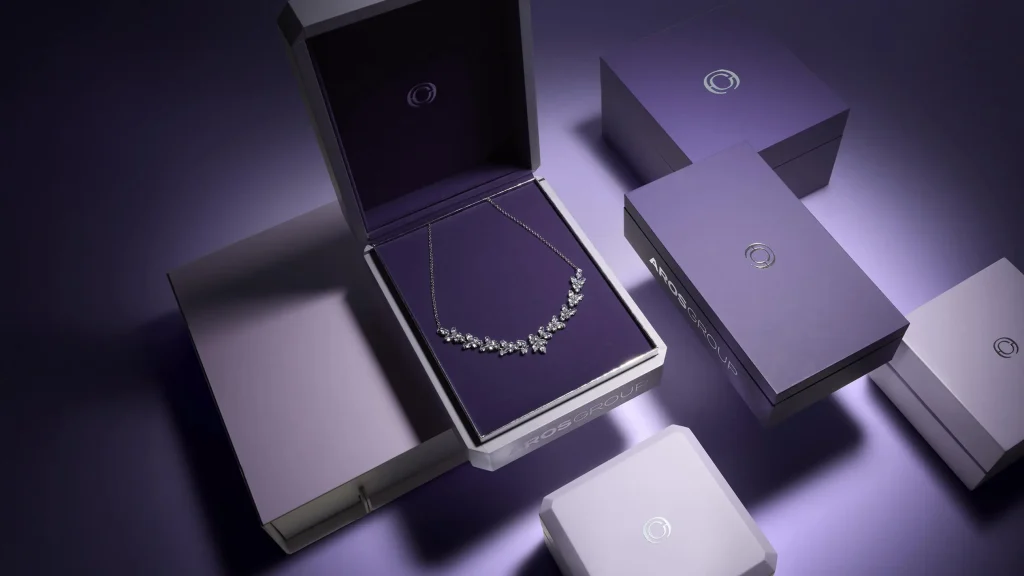
The acoustic signature of a luxury packaging is perhaps its most rarely named dimension, yet one of the most immediately felt. The low, muffled clap of a wooden jewellery case, the silky rustle of the tissue paper enveloping a bottle: these sounds participate in the brand’s sensory narrative just as much as an exclusive typeface or a signature colour.
Perfume houses have long understood this: the design of a bottle systematically integrates the sound of the cap. What applies to the bottle can and must extend to the entire packaging system.
Every material produces its own sonic timbre. Glass resonates differently from metal; wood absorbs sound where aluminium reflects it. A well-mastered sensory packaging integrates this acoustic reality from the moment materials are selected, choosing combinations capable of producing the desired sound (and eliminating unwanted noise).
This dimension requires a packaging partner capable of reasoning simultaneously in aesthetic and sensory engineering terms: two disciplines that few manufacturers master together.
This is precisely where the value of a co-creation approach lies: imagining the acoustic signature before even sketching the form, testing prototypes, iterating until the perfect accord is found between the sound produced and the image the brand wishes to project.
Among the five senses, olfaction holds a unique neurological privilege: odours are processed directly by the limbic system, the seat of emotion and long-term memory. Where an image fades and a sound is forgotten, a fragrance resurfaces with disconcerting precision months or even years later. For luxury houses, this property of olfactory memory represents an extraordinary loyalty lever.
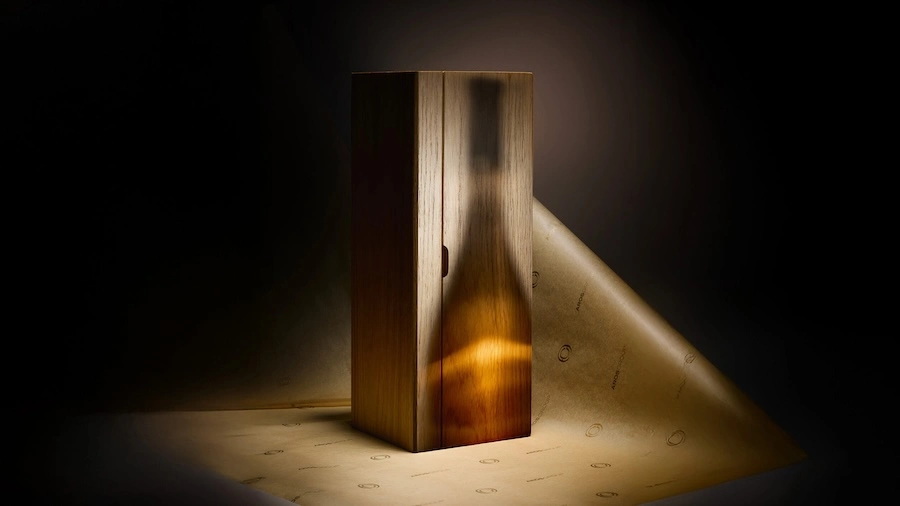
Certain noble materials possess an intrinsic olfactory signature that naturally enriches the unboxing experience: cedarwood from a spirits gift box, the natural leather of a jewellery case, unbleached kraft from a natural cosmetics packaging.
These scents speak of authenticity, craftsmanship and unprocessed raw materials: a particularly powerful message at a time when premium consumers value transparency and naturalness.
Beyond the natural scents of materials, innovative technologies now make it possible to integrate an intentional olfactory signature into the packaging itself. Micro-encapsulation on paper or cardboard (a technique that traps aromatic molecules in micro-capsules activated by friction) opens a considerable creative field for brands wishing to align their sensory packaging with their olfactory territory.
Scented inks can be applied to packaging surfaces via specific printing processes, creating a multisensory experience at the very moment of discovery.
These innovations must nevertheless be handled with precision: compatibility with the product contained, longevity of the fragrance over time, and compliance with regulations and environmental certification requirements.
Designing an exceptional sensory packaging cannot be improvised: it requires a partner capable of reasoning simultaneously in creative, technical, acoustic and olfactory terms, mastering the sensory properties of each material. This is the approach AROS Group has developed alongside perfumery, spirits, jewellery and high gastronomy houses: an industrialised craftsmanship that combines the rigour of large-scale production with the precision of artisanal expertise.
From creative co-conception to sensory prototyping, through to industrialisation and international logistics coordination from Paris, New York, Shanghai, Milan, Dubai or São Paulo, AROS Group accompanies luxury houses at every stage.
To discover our co-creation process and multi-material expertise, our team is available to discuss your next project.
Ecovadis certifications, FSC sourcing, recycled aluminium, eco-designed papers: at AROS Group, every creation integrates an environmental reflection without ever compromising on sensory quality. For RSE directors and innovation teams, this is the assurance that an exceptional sensory packaging can also be an act of assumed responsibility and an additional chapter in the brand’s storytelling.
Luxury sensory packaging is not a 2026 trend; it is a structural response to the evolution of consumer expectations and the saturation of visual codes. Tactility, sound, olfactory signature: these three dimensions constitute a creative and strategic innovation territory that pioneering houses are investing in with method, treating every material as an instrument and every gesture as a note in a broader score.
Are you considering rethinking your packaging or designing a signature case for an upcoming launch? AROS Group accompanies you from sketch to production, with the creative excellence and industrial mastery your brand deserves.